By Alan Donnelly
Forty years into a career, most bands are content to celebrate the past. Not 54-40.
A few days before the band played Taste of Edmonton, I caught up with guitarist Dave Genn by phone while they drove from Taber to Edmonton. I asked him what keeps a band together for more than four decades.
He didn’t reach for the usual answers. No talk of record sales. No nostalgia. No misty-eyed reflections on the good old days. “We were never content to just be a jukebox and play the hits of yesteryear,” he said. “We continue to make records. We continue to write songs.”

That’s an easy thing to say and a much harder thing to live up to. Yet 54-40 have been doing exactly that since they first formed in South Delta, B.C. While many bands of their generation are content to tour the catalogue, 54-40 continue to add to it. Their latest album, PORTO, released earlier this year, feels less like a victory lap than another chapter.
Recorded in Portugal with longtime producer Warne Livesey, the album wasn’t built in the studio. The songs had already spent months finding their footing on stage. “We worked those songs live for months before we recorded them,” Genn told me. “By the time we got to Portugal, it was about capturing the performance.”
The band’s creative momentum hasn’t been confined to the studio. This year they released Ocean Pearl, a West Coast lager brewed in collaboration with Four Winds and Barnside. Named after one of 54-40’s best-known songs and the South Delta community where the band got its start, it’s another example of the band’s willingness to celebrate its roots without becoming defined by them.
“I love that song, and I love beer,” Genn said, laughing. “It’s a marriage made in heaven.”

Fans were also treated to Travel With Jack, a previously unreleased recording from the Smiling Buddha Cabaret sessions. “Just a little Easter egg,” he explained. “Something we’ve kept under wraps until now.”
I asked what had made the band’s bond last. Genn told me about another touring musician who couldn’t believe the members of 54-40 still travelled together, still shared meals, and still spent time with one another after soundcheck.
“We genuinely like each other’s company,” he said. That answer stayed with me.
A few days later, standing in Sir Winston Churchill Square, it became clear he hadn’t been offering a polished interview line. He’d simply been describing the band.
Long before lightning flashed over the Edmonton skyline, 54-40 had already delivered on everything Genn promised.
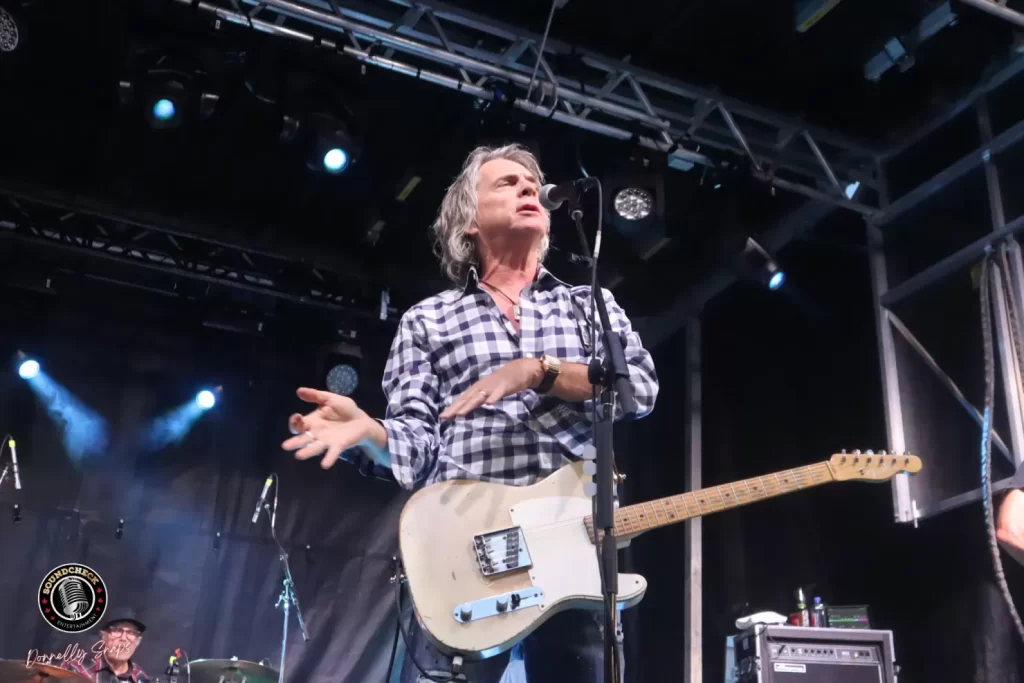
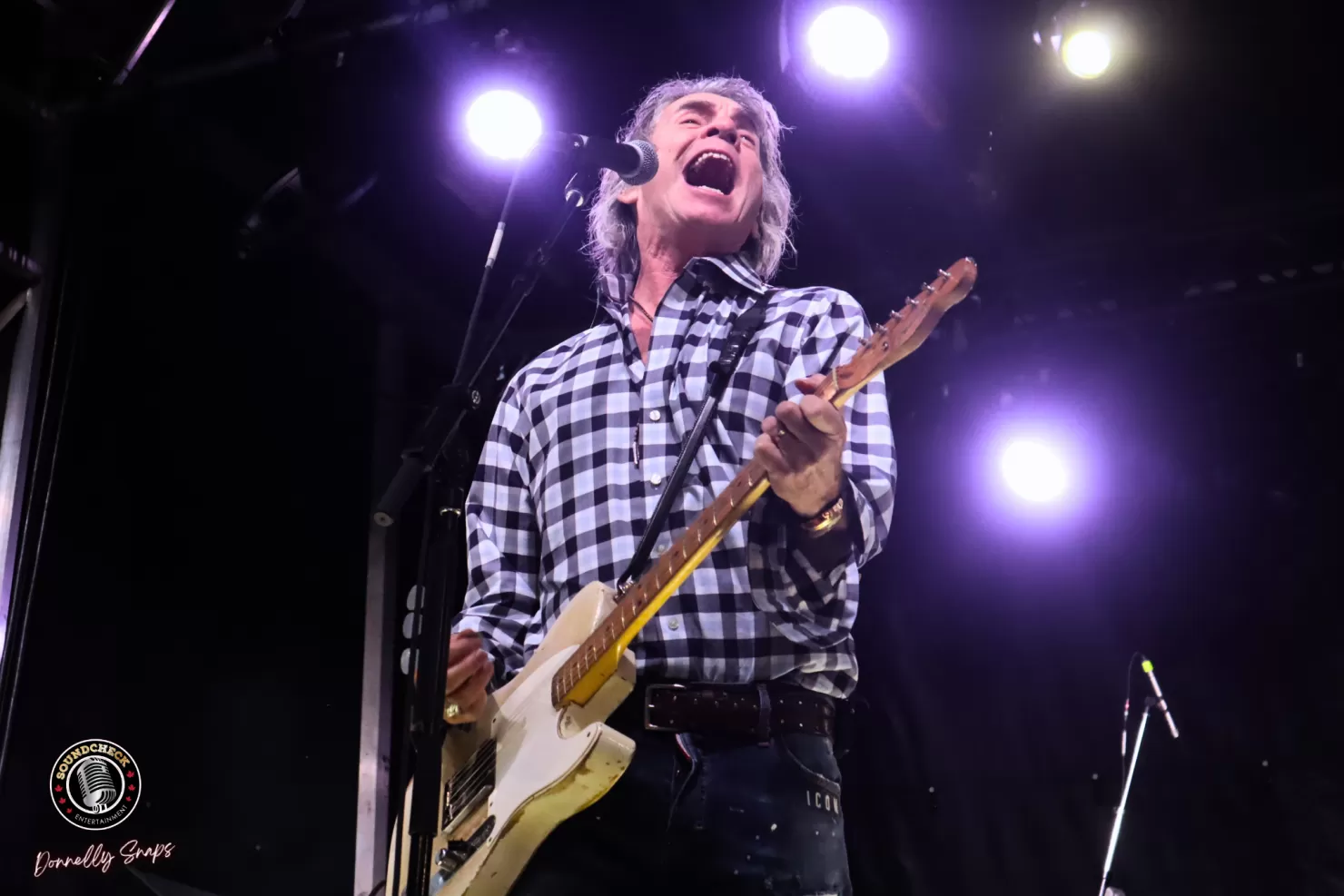
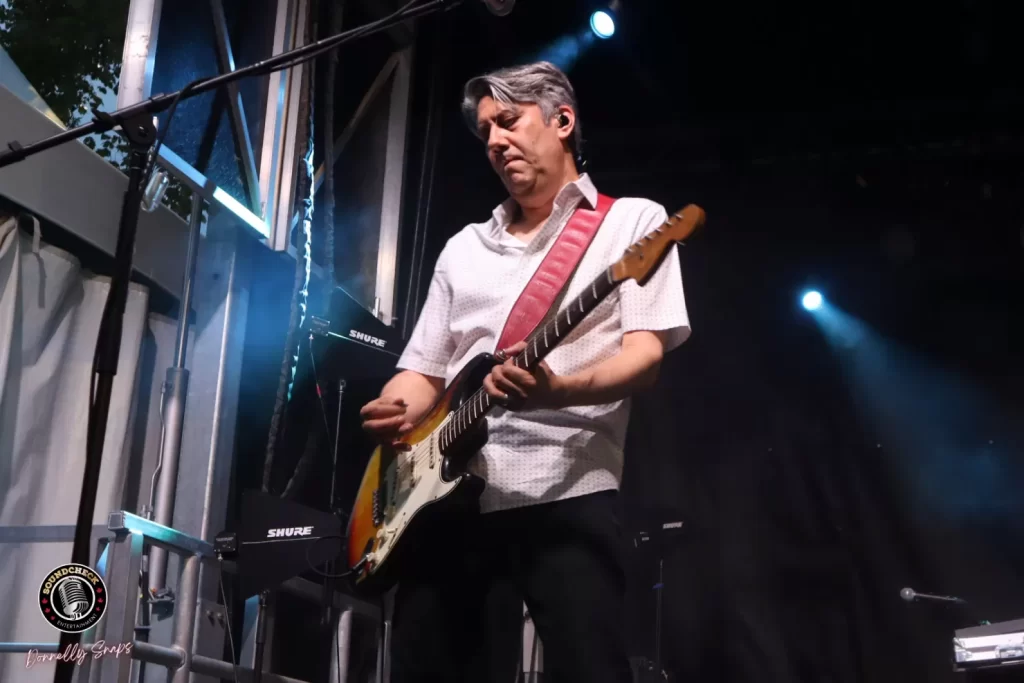
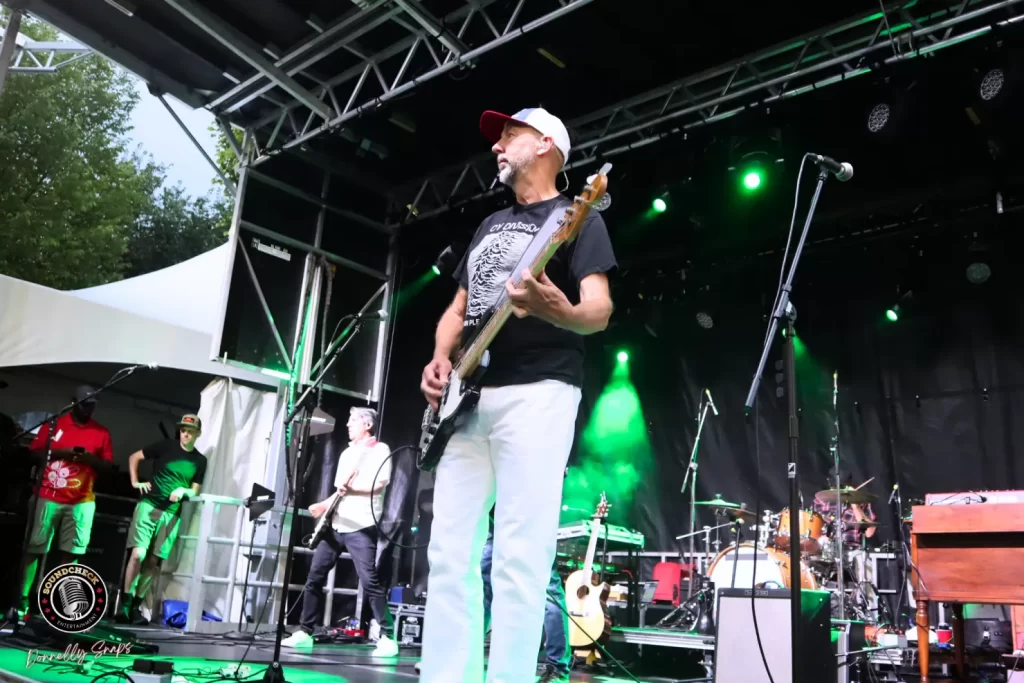
I found myself watching less for the big moments and more for the little ones: the eye contact, the way the band stretched sections without anyone seeming to lead, the confidence to leave space instead of filling every bar. Nothing felt forced or over-rehearsed. It was simply four musicians who’d spent decades learning each other’s instincts. That’s not the sort of thing you can fake, and it’s even harder to keep after forty years.
Watching them live, I felt his comments carry more weight. This wasn’t a band clinging to old glories, nor one trying to outrun them. It was a band completely comfortable with its past and still excited about what comes next.
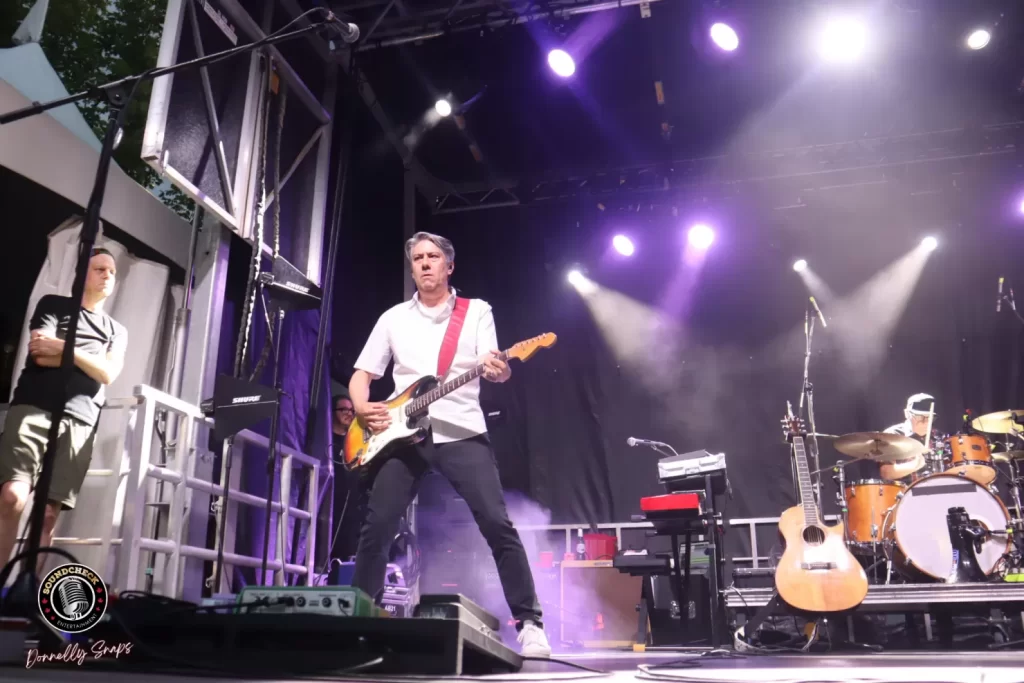
The weather threatened throughout the evening, but for most of the set the crowd paid it little attention. Then “She-La” began.
You could feel it move through the audience almost instantly. Smiles appeared before the chorus arrived. Some people sang every word without thinking, the way you do with songs that have quietly followed you through different stages of your life. Others simply stood there grinning, momentarily transported somewhere only they could see. That’s what a great song does. It doesn’t just remind you of a moment. It pulls you back inside it.
They could have coasted on that feeling for the rest of the night and nobody would have blamed them. Instead, they did exactly what Genn had promised. They kept moving forward.

New material from PORTO, “Running for the Fence,” never felt like an interruption between the classics. The song belonged. There was no noticeable drop in energy, no polite applause reserved for unfamiliar material while everyone waited for the next hit. The audience stayed with them because the songs earned it.
As their set continued, the storm slowly made itself known. Thunder rolled somewhere beyond the downtown skyline. More and more heads tilted upward between songs as the clouds thickened overhead. Then came the lightning.

Surprisingly, there was little disappointment. Instead, there seemed to be a quiet appreciation for having watched a band more than forty years into its career continue to take creative risks rather than settle into routine. That, more than anything, was the story Genn had been telling me all along.
A new album. A long-lost recording finally released. A beer celebrating where it all began. None of it felt like a band looking backwards. Together, they read like musicians still finding reasons to create.
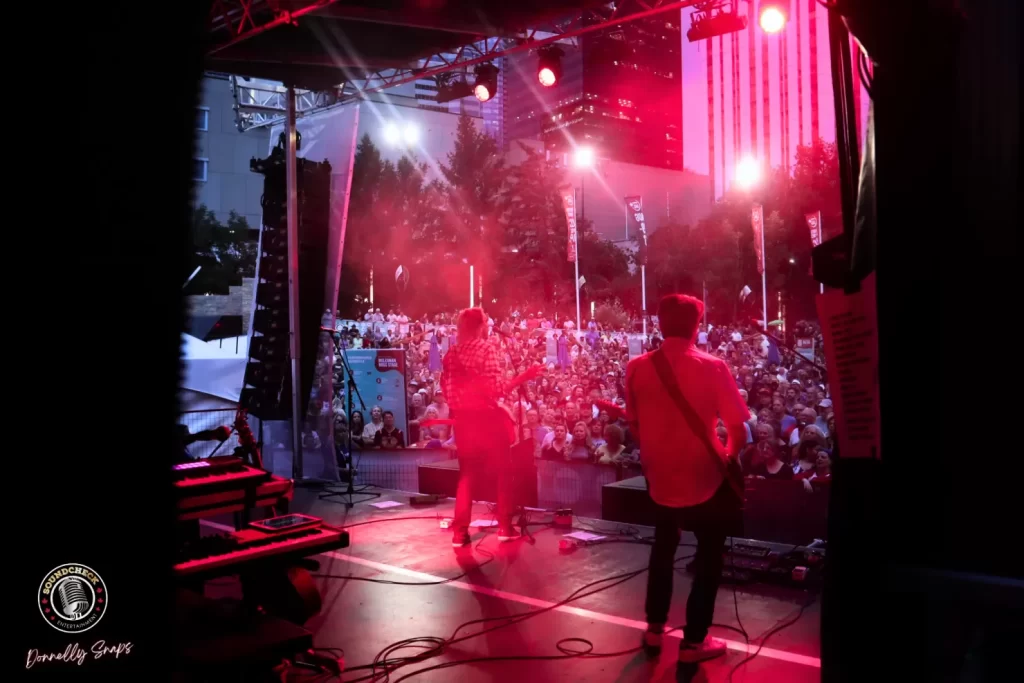
The weather may have had the final word that evening. But 54-40 had the louder one.
More than four decades after they first plugged in, they’re still making the case that great bands don’t last by living off what they’ve already written. They last because they believe the next song might still be the one that matters most.